
Hytera PD785 VHF DMR Portable Handheld Professional Radio (136–174 MHz)
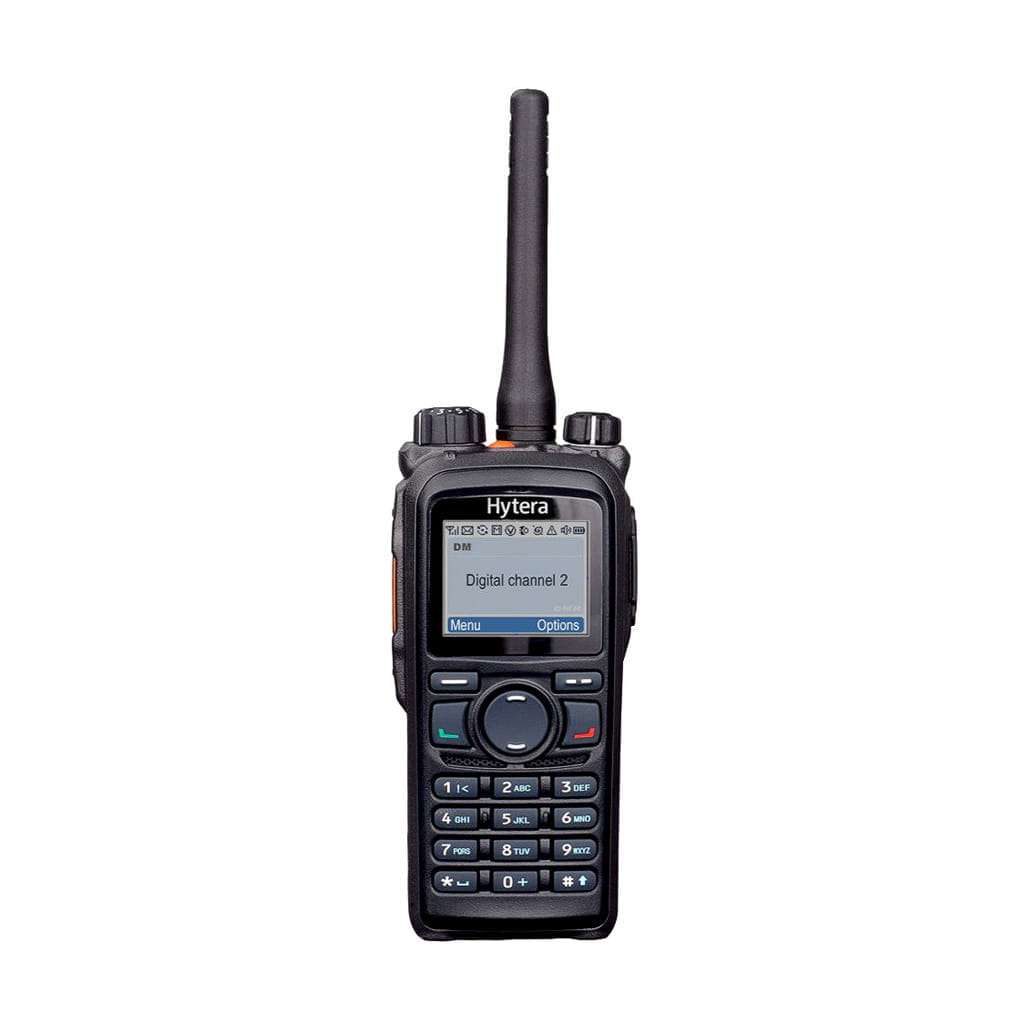
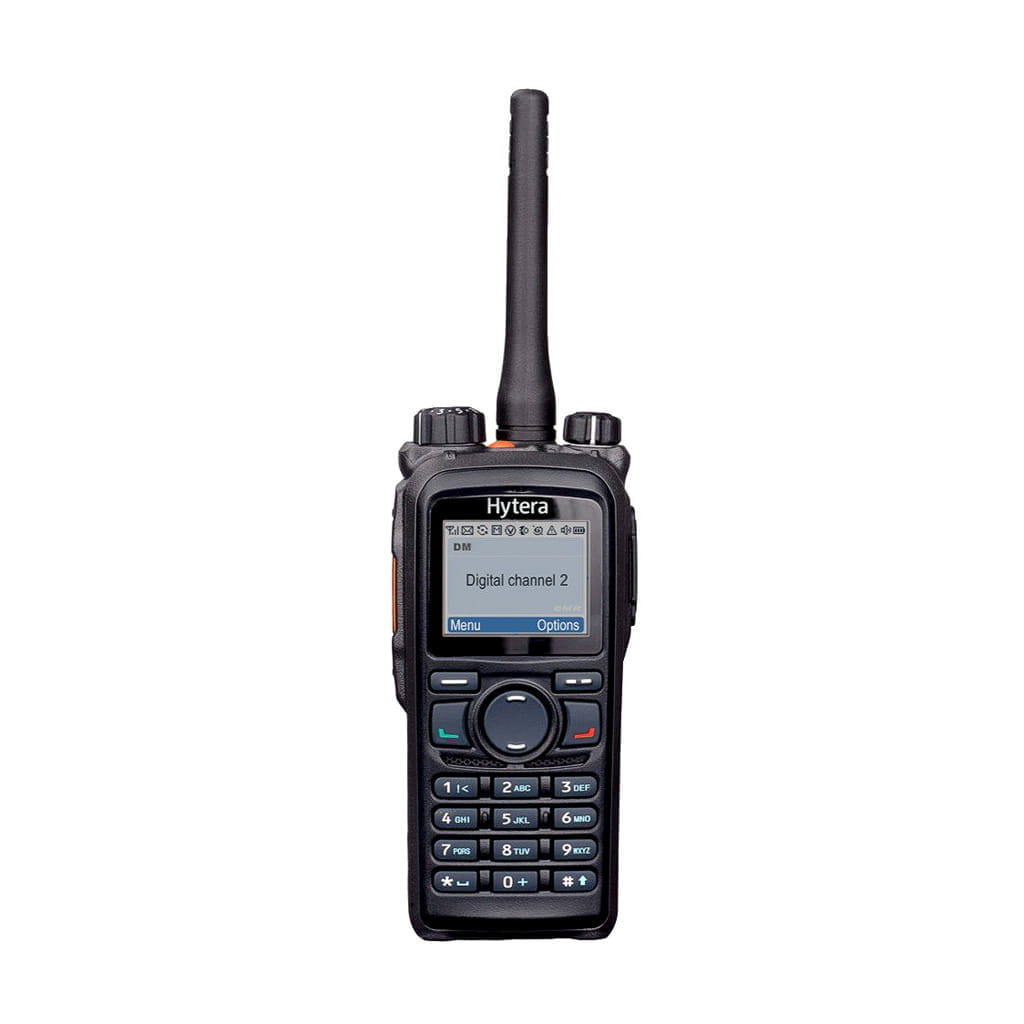
The PD785 VHF is a portable handheld DMR professional two-way radio operating on 136–174 MHz. It weighs 355g, carries an IP67 rating, and is MIL-STD-810 C/D/E/F/G certified.
VHF propagation delivers strong outdoor performance across open sites, seaports, construction yards, and campus-scale operations where signal reach matters. The radio runs DMR Tier II/III and analog FM in dual mode with 1024-channel capacity. ARC4 encryption is standard.
The PD785G VHF adds built-in GPS and Man Down alarm.

Authorized Dealer

Fast Nationwide Shipping

Technical Support & Programming

Bulk Pricing Available
Why Professionals Choose the Hytera PD785 VHF
The PD785 VHF is a portable handheld radio — 125×55×37 mm with standard battery, 355g — built for operations where coverage across open terrain is the primary requirement. VHF at 136–174 MHz propagates farther in outdoor environments than UHF, with better signal penetration through foliage and across water. This makes the PD785 VHF a practical choice for seaport ground crews, construction sites, campus security, agriculture operations, and any team spread across a large outdoor footprint.
TX output is 5W (High) / 1W (Low) on VHF. The radio operates on DMR Tier II/III TDMA, doubling channel capacity versus analog FDMA on the same spectrum. XPT (Extended Pseudo Trunking) allocates slots dynamically without a dedicated control channel — reducing repeater infrastructure cost for mid-size outdoor deployments. Analog FM mode and mixed-mode scanning allow the PD785 VHF to operate alongside legacy analog radios during phased migration.
IP67 confirms full dust protection and immersion to 1m for 30 minutes. MIL-STD-810 C/D/E/F/G covers shock, vibration, temperature from –30°C to +60°C, humidity, and water exposure — verified in the Hytera datasheet. The 1.8-inch TFT color display (160×128 px) stays readable in direct outdoor light.
Receiver sensitivity is 0.22μV typical (12dB SINAD), with 70dB adjacent channel selectivity at 20/25kHz. Digital battery life in the VHF variant reaches approximately 13.5 hours on a standard 2000mAh battery (5-5-90 duty cycle, high power). Encryption is ARC4 40-bit as standard; AES 128/256-bit available via software licence upgrade.
The PD785G VHF adds a GPS module with cold-start TTFF under 1 minute and horizontal accuracy under 10 meters, plus Man Down alarm — automatic emergency trigger when the radio tilts beyond a configured angle. FCC Part 90 licensed.
Specification
General
| Frequency Range | VHF: 136–174 MHz |
| Operating Modes | DMR Tier II (ETSI TS 102 361-1/2/3), Simulcast, XPT Digital Trunking, DMR Tier III (licence) |
| Analog FM, MPT | 1327 |
| Channel Capacity | 1024 (64 zones) |
| Channel Spacing | 12.5 / 20 / 25 kHz (analog) / 12.5 kHz (digital) |
| Operating Voltage | 7.4V nominal |
| Battery (standard) | BL2006 Li-Ion 2000mAh |
| Battery Life - Analog (5-5-90, hi-power) | ~11h (no GPS) / ~10h (GPS on) |
| Battery Life — Digital (5-5-90, hi-power) | ~13.5h (no GPS) / ~12h (GPS on) |
| Antenna Impedance | 50Ω |
| Dimensions (H×W×D) | 125 × 55 × 37 mm (with battery, without antenna) |
| Weight | 355g (with antenna and standard battery) |
| Display | 160×128 px, 65,536 colors, 1.8 in, 4 lines |
| Programmable Keys | 5 + numeric keypad |
| Operating Temperature | –30°C to +60°C |
| Storage Temperature | –40°C to +85°C |
Transmitter
| RF Power Output | 5W (High) / 1W (Low) |
| FM Modulation | 11K0F3E@12.5kHz / 14K0F3E@20kHz / 16K0F3E@25kHz |
| Digital Modulation (4FSK) | 7K60FXD (data only) / 7K60FXW (data + voice) @ 12.5kHz |
Receiver
| Sensitivity — Analog | 0.3μV (12dB SINAD) / 0.22μV typical / 0.4μV (20dB SINAD) |
| Sensitivity — Digital | 0.3μV / BER 5% |
Compliance
| FCC Certification | FCC Part 90 (Land Mobile) |
| IP Rating | IP67 (dust-tight, immersion to 1m / 30 min) |
| Military Standard | MIL-STD-810 C/D/E/F/G (shock, vibration, temperature, humidity, dust, water) |
| ESD | IEC 61000-4-2 Level 4 — ±8kV contact / ±15kV air |
| Digital Standard | ETSI TS 102 361-1/2/3 |
| Encryption (standard) | ARC4 40-bit (DMRA) |
| Encryption (optional) | AES 128-bit / AES 256-bit (software licence) |
FCC Licensing and Compliance Support
The Hytera PD785 and PD785G VHF operate on licensed Land Mobile Radio frequencies under FCC Part 90. A valid FCC Business Radio License is required for each frequency used in commercial operations in the United States.
VHF frequencies in the 136–174 MHz range are commonly allocated for outdoor, construction, transportation, and campus operations. Coordination with existing licensees in your area is part of the licensing process.
As an authorized Hytera dealer, AXDIGITAL supports customers with frequency coordination guidance and licensing requirements. Contact our team to confirm frequency availability, licensing steps, and bulk pricing for your operation.
FAQ
What is the difference between the PD785 VHF and PD785G VHF?
Both models share the same VHF platform, 136–174 MHz range, DMR Tier II/III capability, IP67 rating, and accessory ecosystem. The PD785G VHF adds integrated GPS (TTFF <1 min cold start, <10m accuracy) and Man Down alarm, which triggers an automatic emergency alert if the radio tilts past a set angle. Specify PD785G if GPS tracking or lone-worker safety compliance is required. For frequency band comparison, see the Hytera PD785 UHF page.
Why choose VHF over UHF for this radio?
VHF (136–174 MHz) travels farther in open outdoor environments and penetrates foliage and terrain better than UHF. It is the standard choice for seaports, construction sites, campuses, and outdoor field teams where the operating area is large and mostly outdoors. UHF performs better inside buildings and dense urban areas. If your team works primarily indoors or in a mixed indoor/outdoor environment, the PD785 UHF may be more appropriate.
Can the PD785 VHF work with our existing analog VHF radios?
Yes. The PD785/PD785G operates in dual mode — digital DMR and analog FM — on a per-channel basis. Analog VHF channels in the radio's memory communicate directly with existing analog units on the same frequency and CTCSS/CDCSS tone. This allows a phased digital migration without replacing every radio in the fleet at once. Mixed-mode scanning monitors both analog and digital channels simultaneously.
