Icom IC-A25N Portable Handheld VHF Airband NAV/COM Transceiver
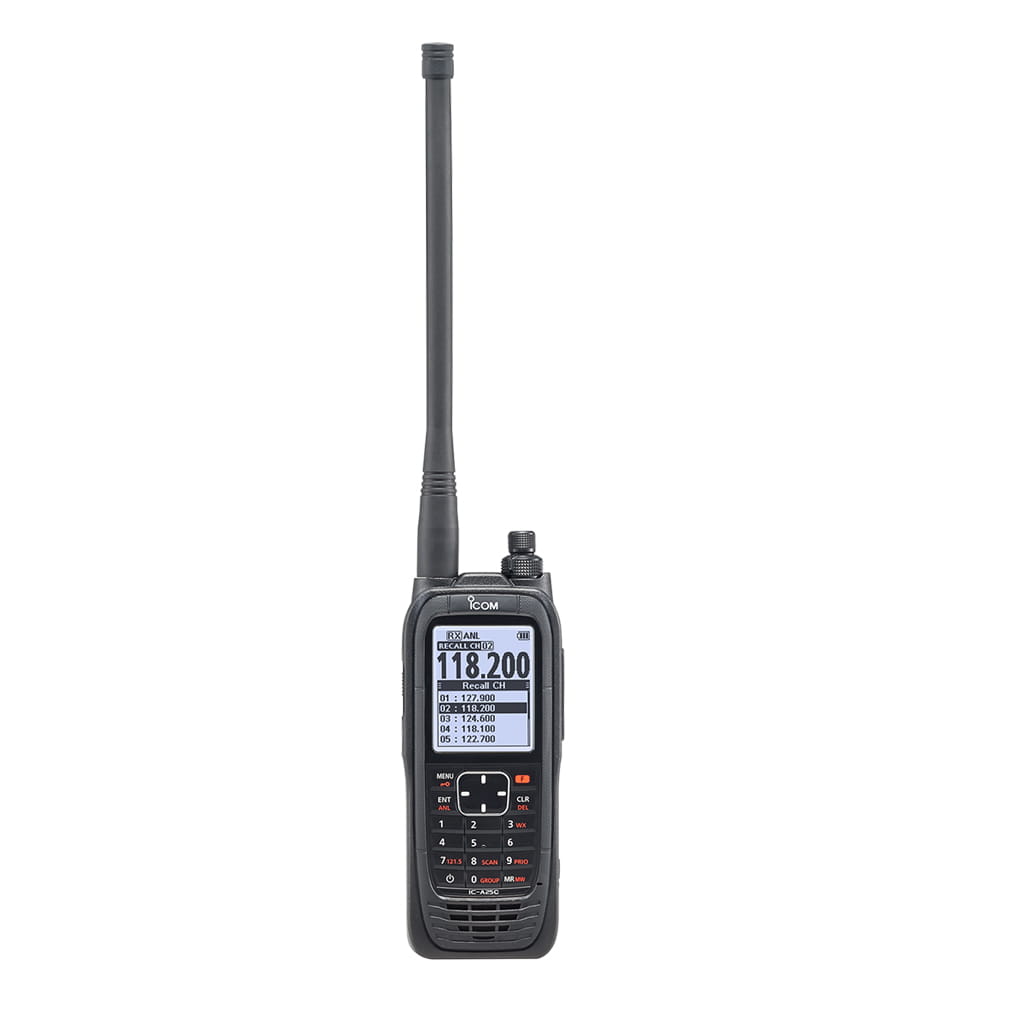
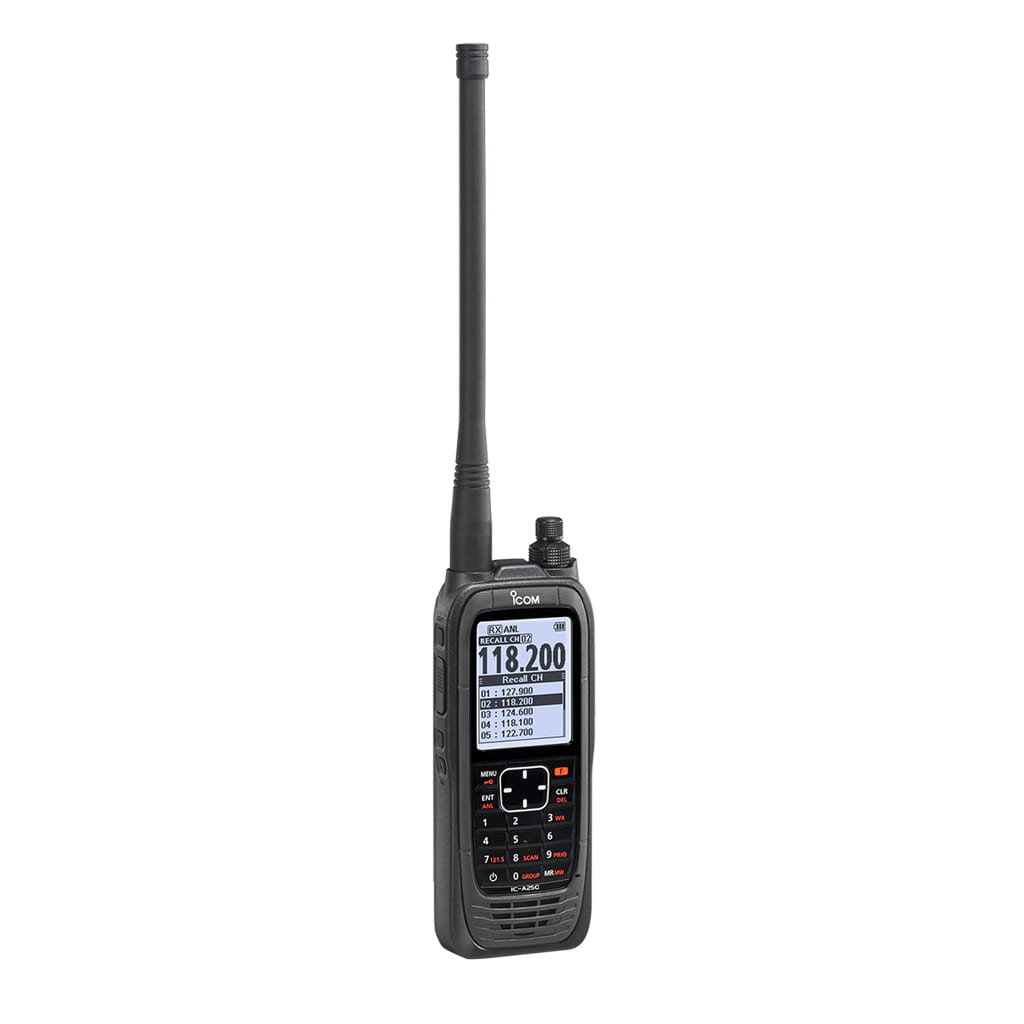
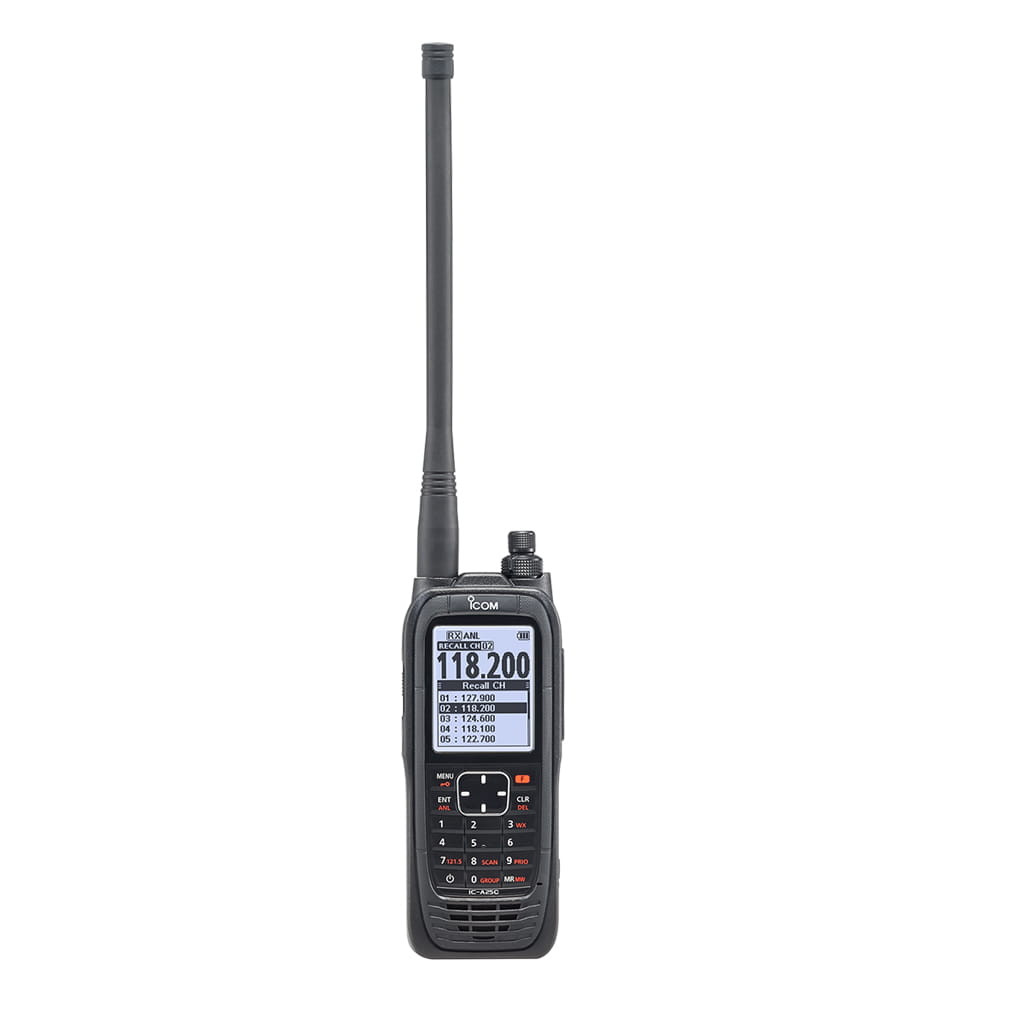
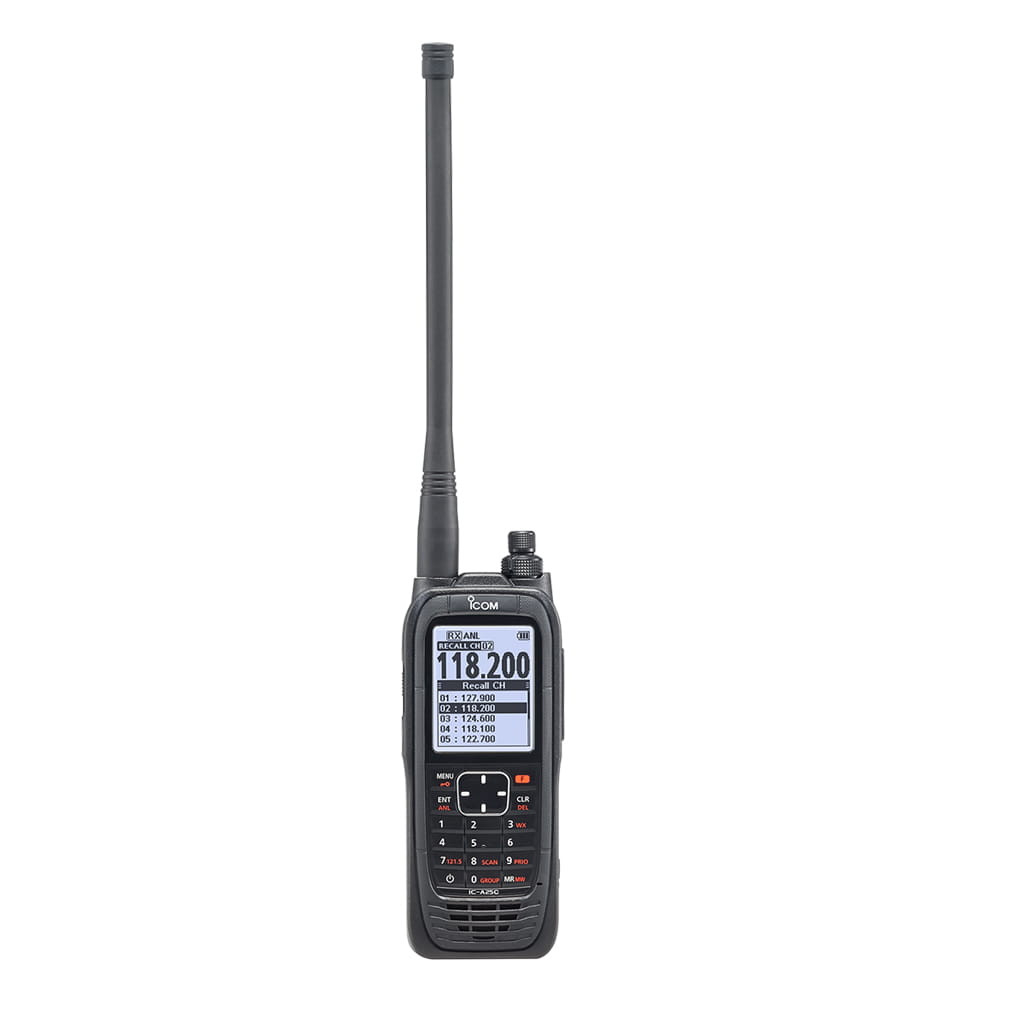
The Icom IC-A25N is a portable handheld VHF airband NAV/COM transceiver with built-in GPS / GLONASS / SBAS, VOR navigation, and Bluetooth. At 340g and 31.8mm deep, it covers COM TX/RX on 118–137 MHz, NAV RX on 108–137 MHz, and weather RX - with a 2.3-inch LCD, 6W (PEP) output, and IP57 / MIL-STD-810 G protection. The BP-288 battery delivers 10.5 hours at 5:5:90 (GPS ON, Bluetooth OFF).

Fast Nationwide Shipping

Technical Support & Programming

Bulk Pricing Available
 Documentation
Why Professionals Choose the Icom IC-A25N
The IC-A25N is a portable handheld NAV/COM transceiver - 58.9×148.4×31.8mm, 340g with BP-288 - for pilots who need an independent backup navigation and communication capability in the cockpit. The 31.8mm depth fits in a flight bag pocket; the 2.3-inch LCD is large enough to read COM frequencies, VOR CDI deviation, and GPS waypoint data without leaning into the instrument panel.
COM TX/RX covers 118.000–136.992 MHz with both 8.33 kHz and 25 kHz channel spacing. NAV RX covers the full 108.000–136.992 MHz band, which includes the VOR navigation frequencies. The built-in VOR CDI displays course deviation with OBS, TO-FROM indicator, and ABSS (Automatic Bearing Set System) - a functional VOR instrument in handheld form. Near Station Search uses stored waypoints with GPS coordinates to identify nearby ground stations by frequency without manual lookup.
GPS / GLONASS / SBAS supports Direct-To NAV (point-to-point guidance to a single waypoint) and Flight Plan NAV (sequential waypoints, up to 10 flight plans with 300 total waypoints). Waypoints are entered manually by lat/lon or imported from an Android/iOS device via the RS-AERO app (RS-AERO1A for Android, RS-AERO1I for iOS) over Bluetooth. Note: no built-in navaid or airport database - waypoints require manual entry or RS-AERO import. Bluetooth also pairs with the optional VS-3 headset or compatible third-party aviation Bluetooth headsets for hands-free operation.
The BP-288 intelligent battery (2350mAh) provides 10.5 hours at 5:5:90 with GPS ON and Bluetooth OFF. Battery health data is visible in the battery status screen. The BP-289 alkaline case (6×AA) provides backup power when charging is not available. An external 11.0V DC input accepts in-aircraft panel power for indefinite operation.
Audio output is 1200mW internal / 530mW external (8Ω). The 121.5 MHz emergency key provides one-button access to the international distress frequency. Flip-Flop channel recall stores the last 10 channels used. FCC Part 87 certified for USA VHF airband operation.

Specification
General
| Mode | NAV/COM | |
| Frequency Range TX | 118.000–136.992 MHz | |
| Frequency Range RX (NAV+COM) | 108.000–136.992 MHz | |
| Frequency Range RX (Weather) | 161.650–163.275 MHz | |
| Memory Channels | 300 channels / 15 groups | |
| Channel Spacing | 25 kHz / 8.33 kHz | |
| Type of Emission | 6K00A3E / 5K60A3E (COM) / 16K0G3E (Weather) | |
| Power Supply | 7.2V DC (BP-288) / 11.0V DC (external DC jack) | |
| Antenna Impedance | 50Ω (BNC connector) | |
| Operating Temperature | –10°C to +60°C | |
| Dimensions (W×H×D, with BP-288) | 58.9×148.4×31.8 mm | |
| Weight (with BP-288) | 340g | |
| Battery | BP-288 Li-Ion 7.2V / 2350mAh | |
| Battery Life (5:5:90, GPS ON, Bluetooth OFF) | 10.5 hours | |
| GPS | Built-in GPS/GLONASS/SBAS | |
| VOR | Built-in CDI with OBS, TO-FROM, ABSS | |
| Bluetooth | Built-in | |
Transmitter
| Output Power | 6.0W (PEP) / 1.8W (carrier) |
| Frequency Stability | ±0.4 kHz |
Receiver
| Intermediate Frequencies | 46.35 MHz (1st) / 450 kHz (2nd) |
| Sensitivity - NAV/COM (6 dB S/N) | <0 dBμ |
| Sensitivity - Weather (12 dB SINAD) | <–8 dBμ |
| Squelch Sensitivity - COM (AM) | <0 dBμ |
| Squelch Sensitivity - Weather (FM) | <–5 dBμ |
| Spurious Response - COM (AM) | >60 dB |
| Spurious Response - Weather (FM) | >30 dB |
| Hum and Noise | >35 dB (at 30% modulation) |
| Audio Output - Internal SP | 1200mW typical (8Ω) |
| Audio Output - External SP | 530mW typical (8Ω) |
| External Speaker Connector | 3.5mm 3-conductor / 8Ω |
Compliance
| FCC Certification | FCC Part 87 - Aviation Radio |
| IP Rating | IP57 (1m / 30 min) |
| MIL-STD | MIL-STD-810 G (also meets C/D/E/F) |
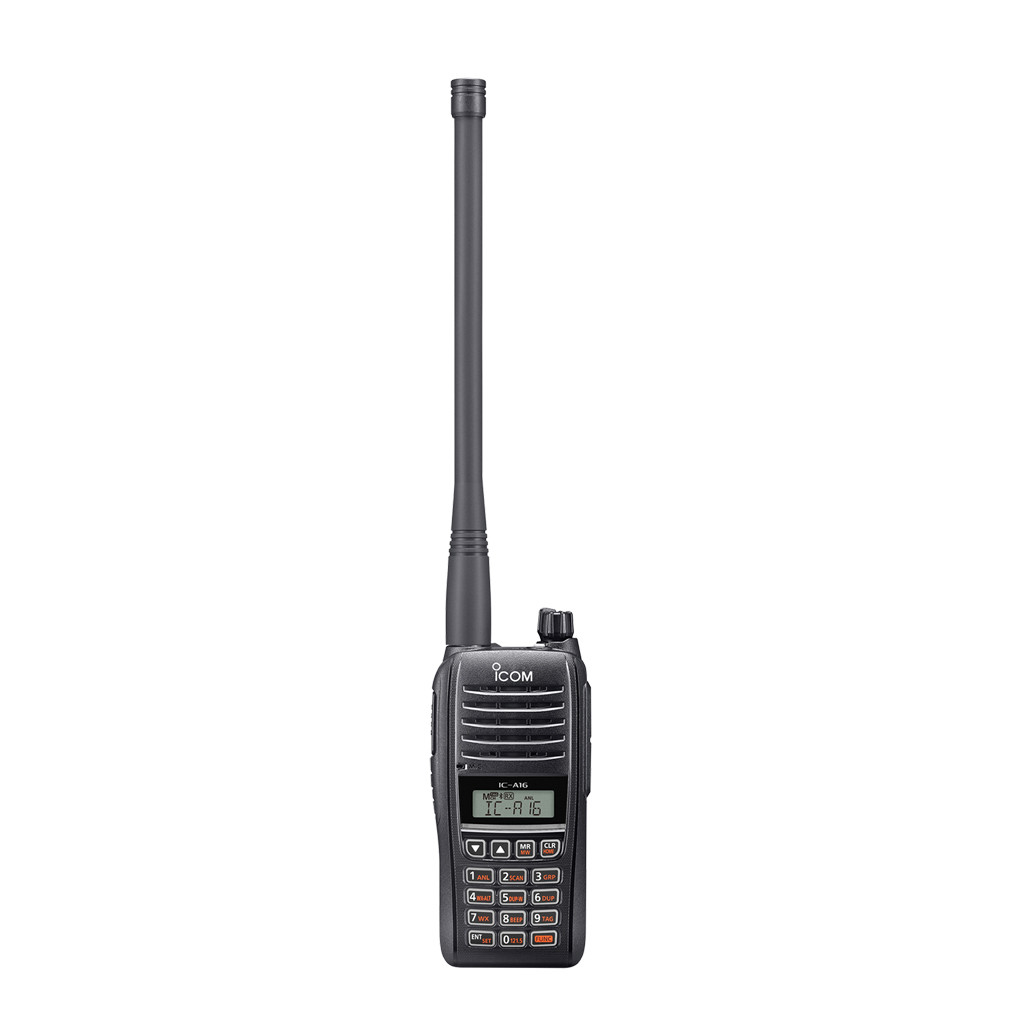
FCC Licensing and Compliance Support
The Icom IC-A25N is FCC Part 87 certified for USA VHF airband operation. In the United States, no separate radio license is required for pilots to operate a handheld VHF airband radio during flight operations within the USA - authorization is covered under the aircraft station license or the pilot's certificate.
A Restricted Radiotelephone Operator Permit (RP) is required for operations in international airspace or at foreign airports. The IC-A25N supports both 8.33 kHz and 25 kHz channel spacing - 25 kHz for domestic USA frequencies, 8.33 kHz for European airspace where it is mandatory above FL195.
The IC-A25N's VOR function receives and displays VOR navigation data from ground-based VOR stations using the radio's 108–118 MHz NAV receive capability. The CDI, OBS, and TO-FROM indicator function as a standalone backup navigation instrument. Note: the IC-A25N has no built-in navaid database - VOR station frequencies must be programmed manually or imported via the RS-AERO app.
The GPS/GLONASS/SBAS receiver provides position data for the waypoint NAV and Near Station Search functions. It does not replace a certified aircraft GPS for IFR navigation - the IC-A25N is a backup and situational awareness tool for VFR pilots.
AXDIGITAL LLC supplies Icom aviation radios and helps with radio selection, FCC Part 87 questions, and RS-AERO app setup for IC-A25N deployments. Contact our team for configuration guidance.
FAQ
What is the difference between the IC-A25N and IC-A25C?
The IC-A25N is the NAV/COM version - it has built-in GPS/GLONASS/SBAS, VOR CDI navigation, Bluetooth, and NAV RX covering 108–137 MHz. The IC-A25C is COM only - no GPS, no VOR, no Bluetooth, and RX covers only 118–137 MHz (no NAV band). Both share the same TX specs, channel capacity, battery, display, and protection ratings. If you need VOR monitoring or GPS waypoint navigation as a backup, specify the IC-A25N.
Does the IC-A25N have a built-in airport or navaid database?
No. The IC-A25N has no built-in navaid or airport database. Waypoints are entered manually as latitude/longitude coordinates, or imported from an Android or iOS device via Bluetooth using the free RS-AERO app (RS-AERO1A for Android, RS-AERO1I for iOS). VOR station frequencies must be programmed into memory manually. This makes the radio a capable backup navigation tool but not a direct replacement for a panel-mounted GPS with a WAAS database.
Can the IC-A25N be powered from the aircraft's electrical system?
Yes. The external DC jack accepts 11.0V DC input, allowing the radio to run from the aircraft panel power without draining the BP-288 battery. This is useful for extended flights where battery life would otherwise be a constraint. The CP-20 cigarette lighter cable connects to a 12V aircraft or vehicle outlet; the OPC-515L DC power cable connects to a hardwired 11.0V source.