Motorola XPR3300e MOTOTRBO Digital Portable Two-Way Radio (UHF 403–512 MHz)
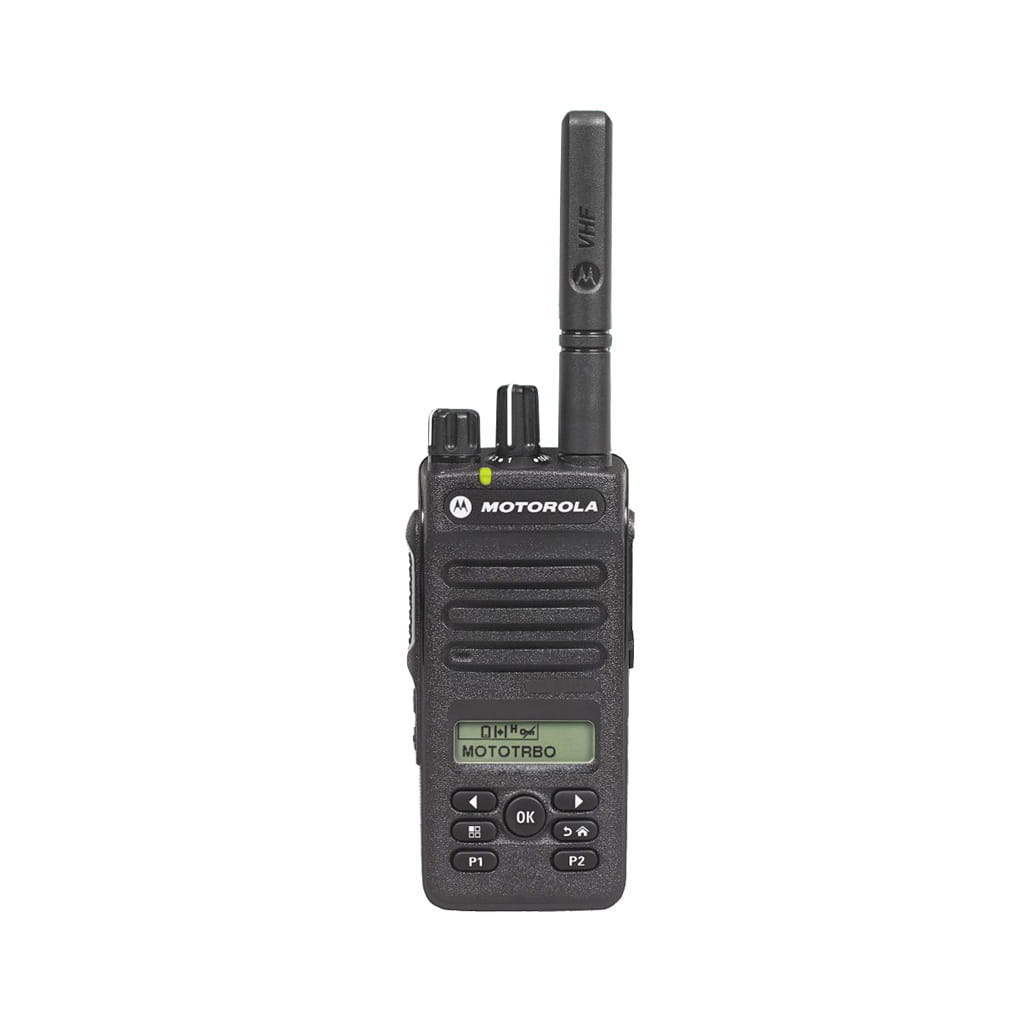


The XPR3300e UHF is a professional MOTOTRBO digital radio for indoor industrial operations — manufacturing plants, utilities, construction sites, and facilities where radios work within a managed communication system rather than as standalone units. At 4W across the 403–512 MHz UHF band with IP67 waterproofing and up to 27.5 hours of battery life in digital mode, it handles demanding multi-shift environments. HazLoc-certified models are available for operations in areas with flammable gases, vapors, or combustible dust.

Fast Nationwide Shipping

Technical Support & Programming

Bulk Pricing Available
 Data Sheet
Why Professionals Choose the Motorola XPR3300e (UHF)
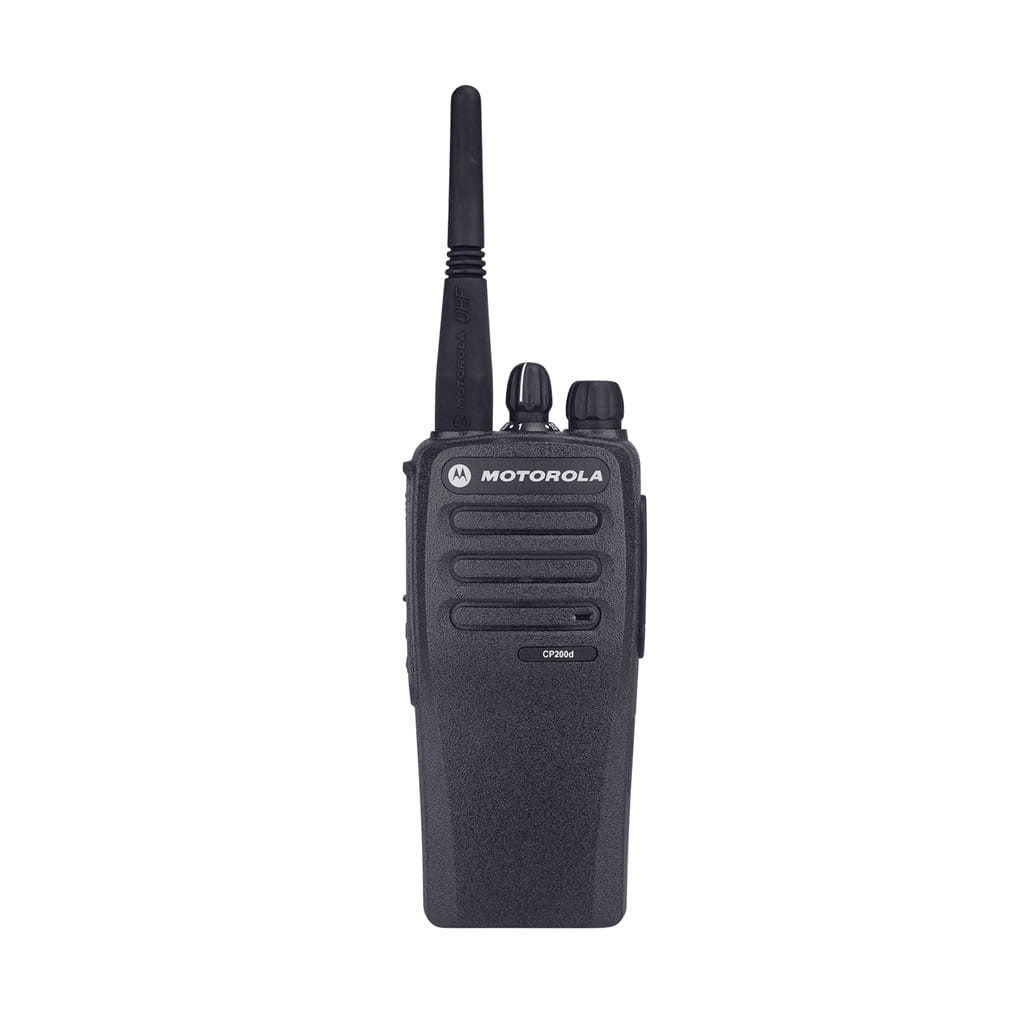
The XPR3300e UHF is built for organizations running structured communication systems across indoor industrial environments — manufacturing plants coordinating production zones, utilities managing indoor infrastructure teams, construction operations on multi-building sites, and facilities where radios need to function inside a managed network rather than as independent push-to-talk devices. The no-display form factor keeps the interface simple for workers who use radio as a utility tool: power on, select channel, transmit. At 264g (9 oz) with the standard battery, it is lighter than the CP200d UHF (341g) while delivering substantially higher specification across every category — IP67 vs IP54, 5-year warranty vs 2-year, integrated Wi-Fi, Bluetooth 4.0, and system-level trunking support.
Professional Features
- SINC+ Noise Cancellation Yes — standard
- Intelligent Audio Yes — standard
- IMPRES Audio Yes — standard
- Bluetooth Audio Yes — standard
- Integrated Wi-Fi Yes — standard<
- Over-the-Air Software Updates Yes (via Wi-Fi)
- IMPRES Battery Management Yes — standard
- Dual Capacity Direct Mode Yes
- IP Site Connect Yes
- Capacity Plus Single/Multi-Site Yes
- Lone Worker Yes
- Digital Emergency Yes
- Transmit Interrupt (Decode) Yes
- Basic Privacy Yes
- Remote Monitor (Decode) Yes
- Radio Disable/Enable (Decode) Yes
- HazLoc Certification Optional (UL-Rated model + UL-Rated battery)
- Voice Announcement Yes
- Canned Text Messaging Yes
UHF at 403–512 MHz is the standard frequency band for indoor multi-floor facilities in the United States. At this range, signals penetrate concrete walls, steel structural elements, elevator shafts, and mechanical equipment floors — the building materials that make indoor radio coverage predictable across manufacturing plants, hospital buildings, distribution centers, and multi-story commercial facilities. The XPR3300e UHF frequency range extends to 512 MHz, wider than the CP200d's 403–470 MHz ceiling, providing additional frequency options for organizations with existing licenses above 470 MHz or operating in congested frequency markets.
Confirmed in the official Motorola XPR 3000e Series datasheet (motorolasolutions.com, February 2021), HazLoc-certified models of the XPR3300e are UL-Approved to TIA-4950 for use in Hazardous Locations — Division 1, Class I, II, III, Groups C, D, E, F, G — environments where flammable gases, vapors, or combustible dust may be present. This certification applies to chemical processing plants, petroleum facilities, grain handling and milling operations, pharmaceutical manufacturing, and paint or solvent environments where standard commercial radios cannot be deployed for safety compliance. The HazLoc model requires a Motorola UL-Approved battery (PMNN4490); the radio and battery are evaluated together as a certified system. No equivalent HazLoc option exists for the CP100d or CP200d.
The IP67 rating — confirmed in the official datasheet at 1 meter depth for 30 minutes — provides full submersion protection, a significant step above the IP54 found on the CP100d and CP200d. For manufacturing environments with hose washdowns, food and beverage processing with wet sanitization protocols, or facilities where radios are regularly exposed to standing water, IP67 eliminates the risk of water intrusion that IP54-rated radios carry. The standard 2100mAh IMPRES battery delivers 18.5 hours in digital mode under a 5-5-90 duty cycle. The optional 3000mAh high-capacity battery extends runtime to 27.5 hours — covering three shifts without a battery swap, which reduces operational disruption in continuous production environments where radio exchange mid-shift is difficult to coordinate.
Integrated Wi-Fi (802.11b/g/n) enables over-the-air software updates and fleet management across the entire radio deployment without collecting individual units for cable programming. For manufacturing operations where radios are distributed across large production areas, Wi-Fi OTA eliminates the logistics of manual radio collection — updates push to all units when they come within range of a configured access point. IMPRES Battery Management monitors battery health and charge cycle history across the fleet, identifying batteries approaching end of service life before they fail in the field.

Specification
General
| Frequency Range | UHF 403–512 MHz |
| Channel Capacity | 16 (NKP — no keypad model) |
| Channel Spacing | 12.5 kHz (25 kHz not available in USA) |
| Power Supply | 7.5V (nominal) |
| Battery (Standard) | IMPRES Li-Ion 2100mAh (PMNN4491 / PMNN4544) |
| Battery (high-capacity) | IMPRES Li-Ion 3000mAh |
| Battery (UL-Rated, HazLoc) | IMPRES Li-Ion UL-Rated (PMNN4490) |
| Battery Life — digital (5-5-90) | 18.5h (2100mAh) / 27.5h (3000mAh) |
| Battery Life — analog (5-5-90) | 14.0h (2100mAh) / 21.0h (3000mAh) |
| Operating Temperature | −30°C to +60°C (−22°F to +140°F) |
| Dimensions (H×W×D) with standard battery | 122 × 56 × 36 mm (4.8" × 2.2" × 1.4") |
| Dimensions (H×W×D) with high-cap battery | 122 × 56 × 42 mm (4.8" × 2.2" × 1.7") |
| Weight with standard battery | 264g (9 oz) |
| Weight with high-cap battery | 292g (10 oz) |
| Display | None |
| IP Rating | P67 (1m / 30 min) |
| MIL-STD | 810C / 810D / 810E / 810F / 810G |
| FCC ID | AZ489FT7068 |
Transmitter
| RF Power Output | 4W (High), 1W (Low) |
| Frequency Stability | ±0.5 ppm |
| Channel Spacing | 12.5 kHz |
Receiver
| Analog Sensitivity (12 dB SINAD) | 0.16 µV |
| Digital Sensitivity (5% BER) | 0.14 µV |
Connectivity
| Bluetooth | Version 4.0, Class 2, 10m range |
| Bluetooth Profiles | HSP (Headset), SPP (Serial Port), Motorola fast PTT |
| Wi-Fi Standards | IEEE 802.11b / 802.11g / 802.11n |
| Wi-Fi Security | WPA / WPA-2 / WEP |
| Maximum SSIDs | 64 |
Compliance
| FCC Part 90 | Certified (FCC ID: AZ489FT7068) |
| IP67 | Confirmed — official Motorola XPR 3000e Series datasheet (Feb 2021) |
| MIL-STD-810 C/D/E/F/G | Compliant — full procedure table in official datasheet |
| Salt Fog (MIL-STD 509.1–509.3) | Passed — confirmed in official datasheet |
| HazLoc (UL-Rated model) | UL-Approved to TIA-4950, Division 1, Class I/II/III, Groups C,D,E,F,G |
FCC Licensing and Compliance Support
Operating the Motorola XPR3300e UHF on licensed frequencies in the United States requires an FCC Part 90 license. This applies to commercial and business radio use across manufacturing, utilities, construction, hospitals, and industrial facilities on private licensed UHF frequencies in the 403–512 MHz band.
AXDIGITAL LLC supplies the XPR3300e UHF as a genuine, factory-sealed Motorola unit, and we can share guidance on where FCC Part 90 licensing starts — including how to identify the right UHF frequencies for your facility. UHF is the recommended band for indoor, multi-floor industrial facilities. For multi-site deployments using IP Site Connect or Capacity Plus, we can point you toward what frequency coordination across buildings and sites involves to prevent interference.
The XPR3300e UHF is FCC Part 90 certified (FCC ID: AZ489FT7068). For HazLoc UL-rated models used in classified hazardous environments, we can also point you toward the TIA-4950 compliance and battery certification requirements that apply. Contact us to discuss licensing, system design, and HazLoc compliance for your organization.
FAQ
What is the communication range of the XPR3300e UHF in buildings?
At 4W UHF across 403–512 MHz, the XPR3300e covers multi-floor indoor facilities effectively. The official Motorola datasheet confirms an improved receiver extends range by up to 8% over the previous XPR generation. In buildings, UHF penetrates concrete walls and steel structures typical of manufacturing plants and hospitals — typically covering 4–8 floors depending on construction. For large campuses with multiple buildings, the XPR3300e supports IP Site Connect and Capacity Plus trunking. Contact our team for a site assessment before deploying.
When is the HazLoc (UL-Rated) model required instead of the standard model?
The HazLoc model (AAH02RDC9VA1AN-UL) with UL-Approved battery (PMNN4490) is required when radios will be used in Division 1 Hazardous Locations — areas with continuous or frequent presence of flammable gases, vapors, or combustible dust. This includes chemical processing plants, petroleum refineries, grain mills, pharmaceutical manufacturing with solvent vapors, and paint facilities. Standard radios are not permitted in Division 1 environments regardless of IP rating. Contact us to determine the correct model for your facility's safety classification.
How do Wi-Fi over-the-air updates work in a manufacturing environment?
The XPR3300e connects to a configured Wi-Fi network (802.11b/g/n) and receives firmware or configuration updates pushed via Motorola's Radio Management system. In a manufacturing setting, updates deploy when radios are in range of facility Wi-Fi — during charging at the end of a shift, for example — without requiring physical cable connection. This is particularly valuable for large facilities where collecting radios from workers across multiple production zones for manual programming is operationally difficult. Our team assists with Radio Management configuration as part of fleet deployment.